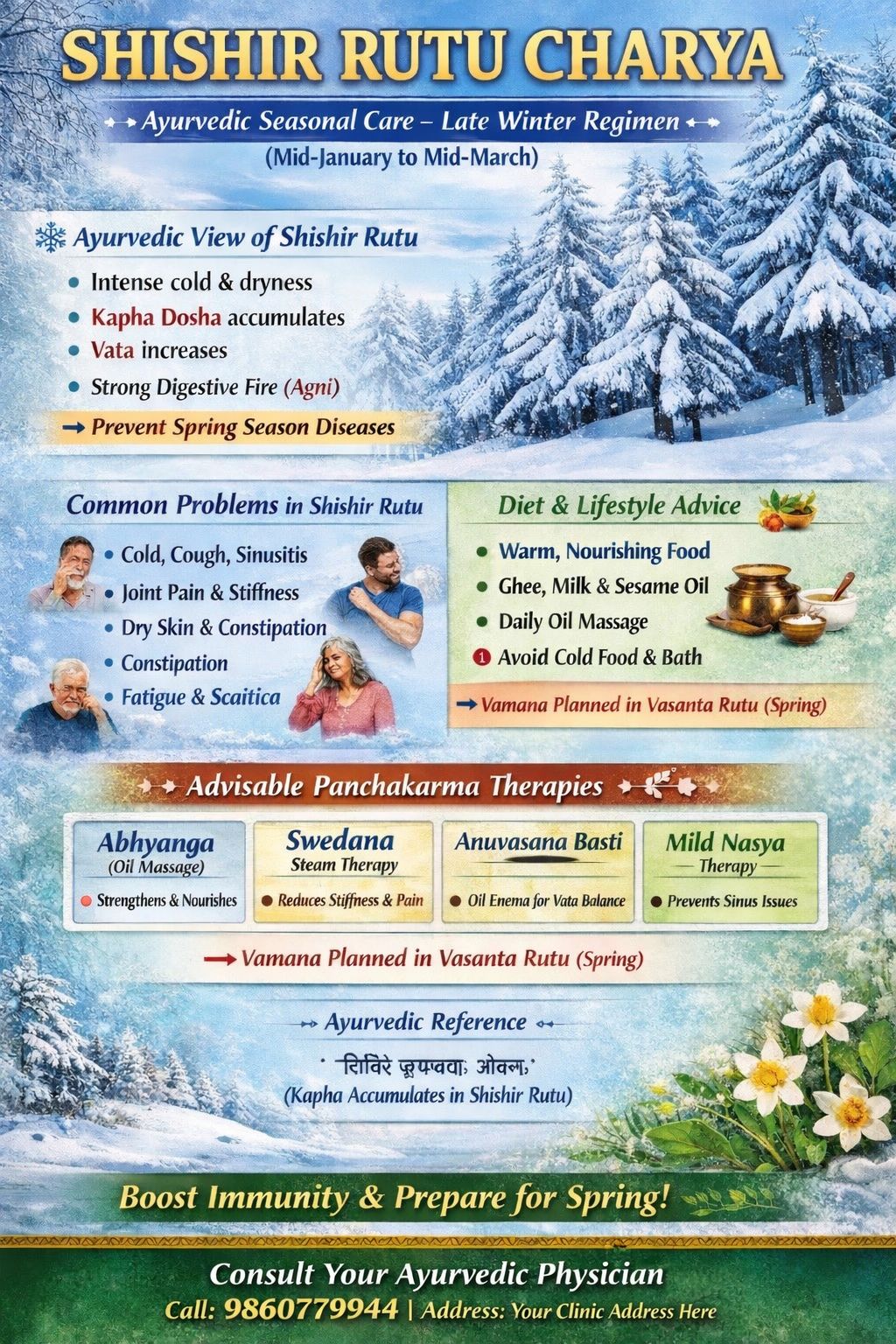
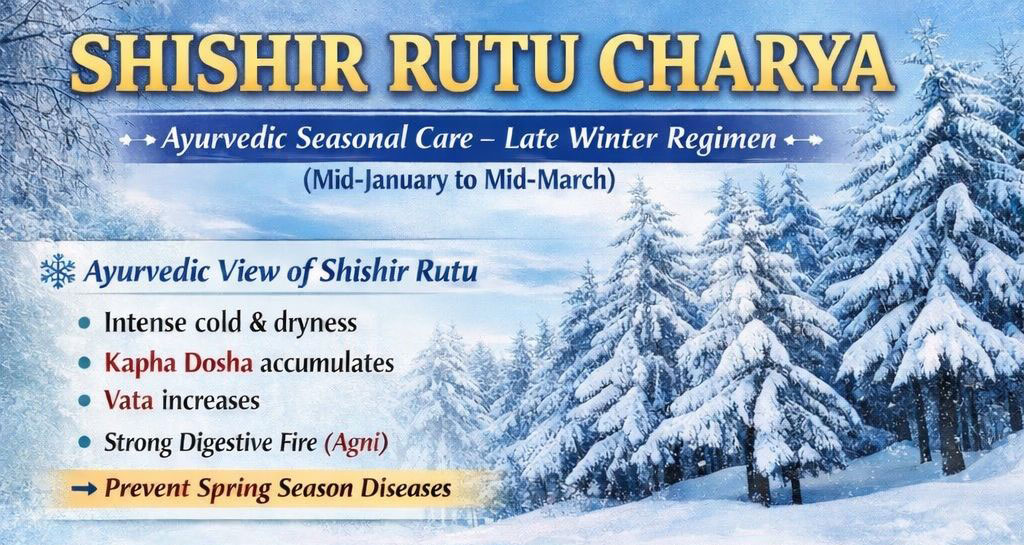
Shishir Rutu is the late winter season described in Ayurveda. It usually falls between January to March. This season is marked by intense cold, dry winds, and reduced moisture in the environment.
What Happens in the Body During Shishir Rutu?
- Digestive fire (Agni) becomes very strong
- Kapha Dosha starts accumulating silently
- Vata increases due to dryness
- Body requires more nourishment and warmth
If proper care is not taken, diseases may appear in the coming spring season (Vasanta Rutu).
Common Health Problems in Shishir Rutu
- Cold, cough, sinus issues
- Joint pain, back pain, stiffness
- Dry skin, cracked heels
- Constipation
- Heaviness, laziness
- Worsening of arthritis and sciatica
What to Eat (Pathya)
- Warm, freshly cooked food
- Ghee, sesame oil
- Wheat, rice, black gram
- Milk and milk products
- Warm water
- Light spices like ginger, pepper
What to Avoid (Apathya)
- Cold food and drinks
- Refrigerated food
- Excess fasting
- Cold water bath
- Excess exposure to cold wind
Best Panchakarma Therapies in Shishir Rutu
Abhyanga (Oil Massage)
Keeps joints healthy, reduces dryness, improves immunity
Swedana (Steam Therapy)
Relieves stiffness, improves circulation
Anuvasana Basti (Oil Enema)
Best for Vata disorders like joint pain, constipation, back pain
Nasya (Nasal Medication – Mild)
Prevents sinusitis, headache, dryness of nose.